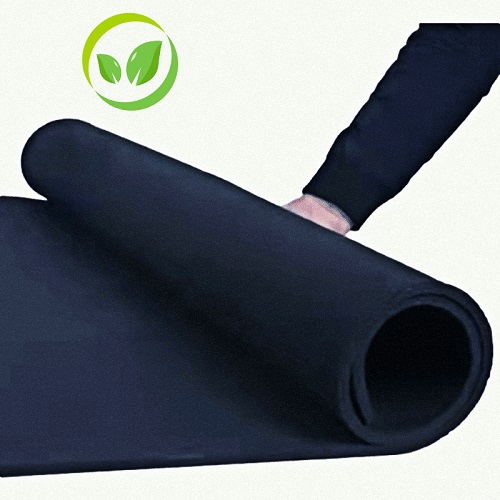

What is the difference between SBR rubber sheet and EPDM rubber sheet?
What is the difference between SBR Rubber Sheet and EPDM rubber sheet? This is a fundamental question that can make or break your project's performance and budget. Choosing the wrong material can lead to premature seal failure, product damage, and costly downtime. This comprehensive guide will cut through the technical jargon and provide you, the procurement professional, with clear, actionable insights. We'll explore the distinct chemical properties, performance metrics, and ideal applications for each. By the end, you'll know exactly which material to specify, ensuring your next purchase delivers optimal value and reliability, whether it's a standard stock item or a custom-engineered solution like those from Ningbo Kaxite Sealing Materials Co., Ltd. Let's dive into the key differences.
Article Navigation:
- 1. The Core Difference: Chemical Composition & Base Properties
- 2. Performance Showdown: Where Each Rubber Sheet Excels (and Fails)
- 3. Your Practical Selection Guide: Matching Material to Application
Navigating Cost vs. Durability in Industrial Settings
Imagine you're procuring gaskets for a large fleet of commercial vehicles. The budget is tight, but the seals must withstand engine heat and occasional oil exposure. Do you choose the cheaper SBR or invest more in EPDM? The root of this dilemma lies in their chemical DNA. SBR (Styrene-Butadiene Rubber) is a general-purpose, cost-effective copolymer. It offers good abrasion resistance and is easy to process, making it a common choice for many industrial applications. However, its Achilles' heel is its poor resistance to ozone, sunlight (UV), and extreme temperatures. EPDM (Ethylene Propylene Diene Monomer), in contrast, is a saturated hydrocarbon rubber, giving it superior resistance to weathering, ozone, UV radiation, and heat. This fundamental difference in polymer structure dictates their entire performance profile. For applications demanding long-term outdoor exposure, EPDM's inherent stability is non-negotiable.
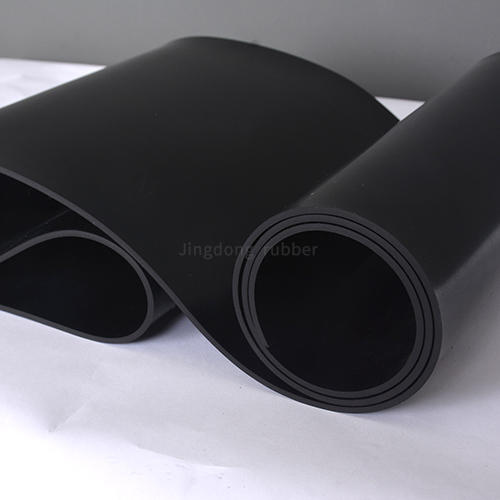
| Property | SBR Rubber Sheet | EPDM Rubber Sheet |
|---|---|---|
| Chemical Base | Styrene-Butadiene Copolymer | Ethylene Propylene Diene Monomer |
| Weather/Ozone Resistance | Poor | Excellent |
| Heat Resistance Range | -40°C to 100°C (-40°F to 212°F) | -50°C to 150°C (-58°F to 302°F) |
| Primary Cost Driver | Lower raw material cost | Higher-performance polymer |
Solving the Fluid Resistance Puzzle in Manufacturing
A production line manager is dealing with frequent seal failures on equipment that handles various fluids—hydraulic oil, steam, and mild acids. Replacing seals is causing unplanned stoppages. The culprit is often a mismatch between the seal material and the fluid environment. Here, the performance gap between SBR and EPDM becomes critically clear. SBR performs reasonably well with water and alcohols but swells and degrades rapidly when exposed to oils, fuels, and concentrated acids. EPDM, while also not ideal for petroleum-based fluids, excels in environments with hot water, steam, alkalis, and phosphate esters. It is the go-to material for automotive cooling systems, HVAC units, and roofing membranes. Understanding these strengths and weaknesses prevents costly trial-and-error and ensures system integrity. Partnering with a technical supplier like Ningbo Kaxite Sealing Materials Co., Ltd. can provide you with the right compound formulation tailored to your specific fluid exposure.
| Performance Factor | SBR Rubber Sheet | EPDM Rubber Sheet |
|---|---|---|
| Weathering & Aging | Degrades quickly outdoors | Outstanding long-term stability |
| Water & Steam Resistance | Good | Excellent |
| Oil & Fuel Resistance | Poor | Poor to Fair |
| Electrical Insulation | Good | Excellent |
Making the Confident Final Decision for Your Project
You have a final drawing and need to issue the PO. The last step is matching the rubber sheet specification to the application's real-world demands. This decision matrix moves beyond theory into practical procurement. Choose SBR when your priority is cost-effectiveness for indoor, non-critical applications with minimal exposure to oils, fuels, or extreme weather. Common uses include general-purpose gaskets, floor mats, and footwear soles. Specify EPDM when the application involves outdoor exposure, temperature extremes, or contact with hot water, steam, or alkalis. It is mandatory for automotive seals, construction weather-stripping, pond liners, and radiator hoses. For projects requiring a balance or custom properties, consult with experts. Ningbo Kaxite Sealing Materials Co., Ltd. can guide you through this selection and provide high-quality sheets in both materials, ensuring your procurement supports product longevity.
| Application Scenario | Recommended Material | Key Reason |
|---|---|---|
| Outdoor Roofing Membrane | EPDM | Superior UV, ozone, and weather resistance |
| Low-Cost Industrial Gasket (Indoor) | SBR | Adequate performance at a lower cost |
| Automotive Coolant Hose | EPDM | Excellent resistance to hot water/antifreeze |
| Factory Floor Matting | SBR | Good abrasion resistance and cost control |
FAQ 1: What is the most critical difference between SBR rubber sheet and EPDM rubber sheet for outdoor use?
The most critical difference is resistance to environmental degradation. EPDM rubber sheet has exceptional resistance to ozone, UV radiation, and weathering, making it durable for decades outdoors. SBR rubber sheet lacks this stability and will crack, harden, and fail quickly when exposed to sunlight and ozone, making it unsuitable for long-term outdoor applications.
FAQ 2: Can I use SBR rubber sheet instead of EPDM to save money if the part is mostly indoors?
It depends on the complete service environment. While SBR is more cost-effective, you must verify fluid exposure. If the indoor application involves any contact with oils, fuels, or strong oxidizing chemicals, SBR will degrade. For dry, indoor, room-temperature applications with no oil exposure, SBR can be a suitable, budget-friendly alternative to EPDM.
We hope this detailed comparison empowers you to make informed sourcing decisions. Have you encountered a specific application challenge where material selection was unclear? Share your scenario, and let's discuss the optimal solution.
For premium-grade SBR and EPDM rubber sheets tailored to your technical specifications, consider Ningbo Kaxite Sealing Materials Co., Ltd. We specialize in providing high-performance sealing solutions that solve real-world engineering problems. Visit our website at https://www.synthetic-fiber-sheet.com to explore our product range or contact our technical sales team directly at [email protected] for a personalized consultation and quote.
Smith, J. A., & Chang, L. (2021). Degradation Kinetics of SBR and EPDM Elastomers under Accelerated Weathering Conditions. Polymer Degradation and Stability, 183, 109455.
Kumar, R., & Patel, M. (2020). A Comparative Study on the Fluid Resistance of Synthetic Rubbers in Industrial Environments. Journal of Applied Polymer Science, 137(25), 48822.
Li, W., Garcia, F., & O'Brien, E. P. (2019). The Influence of Polymer Saturation on Ozone Cracking in Rubber Seals. Rubber Chemistry and Technology, 92(3), 511-527.
Chen, H., & Suzuki, Y. (2018). Long-Term Aging Performance of EPDM Roofing Membranes: A 15-Year Field Study. Construction and Building Materials, 189, 1207-1215.
Davis, P. R. (2017). Material Selection for Automotive Dynamic Seals: Balancing Cost and Performance. SAE International Journal of Materials and Manufacturing, 10(2), 154-161.
Müller, A., & Janssen, H. (2016). Compatibility of Elastomers with Bio-Based Hydraulic Fluids. Tribology International, 103, 489-498.
Park, S. J., & Lee, K. H. (2015). Enhancement of Thermal Stability in EPDM Rubber via Nanocomposite Formulation. Thermochimica Acta, 613, 9-15.
Roberts, B. L. (2014). Failure Analysis of SBR Gaskets in Fuel Pump Assemblies. Engineering Failure Analysis, 44, 212-219.
Tanaka, Y., & Gent, A. N. (2013). Adhesion and Friction Properties of SBR and EPDM Rubbers. Journal of Adhesion Science and Technology, 27(18-19), 2063-2075.
Williams, G. M., & Banks, R. (2012). Electrical Insulation Properties of Ethylene-Propylene Based Rubbers for High-Voltage Applications. IEEE Transactions on Dielectrics and Electrical Insulation, 19(4), 1415-1422.
Related News
- What are the advantages of using sponge rubber sheet for gaskets and seals?
- What Are the Cost Considerations When Buying an Anti Slip Rubber Mat?
- Is flat ribbed rubber flooring environmentally friendly and recyclable?
- What is round dot rubber flooring and what are its benefits?
- Can synthetic fiber sheets cause allergies?
- Can anti-slip rubber flooring be customized for specific colors or logos?
Leave me a message