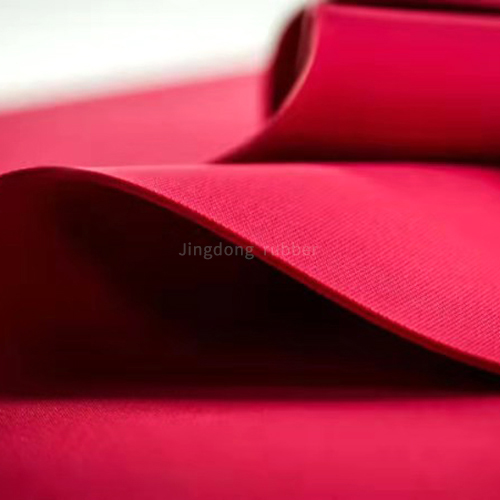

Can anti-slip rubber flooring be customized for specific colors or logos?
Can Anti-Slip Rubber Flooring be customized for specific colors or logos? As a procurement professional sourcing safety flooring for a commercial gym, school, or industrial facility, you need solutions that are not only highly functional but also align with your brand's visual identity. Generic black or grey flooring often falls short. The good news is, yes, advanced manufacturing techniques now allow for extensive customization in anti-slip rubber flooring. Companies like Ningbo Kaxite Sealing Materials Co., Ltd. specialize in transforming this essential safety product into a cohesive part of your design scheme, integrating specific Pantone colors, corporate logos, and even intricate patterns directly into the durable rubber surface. This capability solves a key procurement pain point: finding a supplier that delivers both uncompromised safety performance and aesthetic flexibility.
Article Outline
- Beyond Safety: Addressing Color and Branding Needs
- The Customization Process: From Idea to Installation
- Key Technical Specifications for Custom Flooring
- FAQ: Your Customization Questions Answered
Beyond Safety: Addressing Color and Branding Needs
Procurement officers often face the challenge of balancing stringent safety requirements with architectural or branding mandates. A university wants vibrant, school-color flooring for its new sports complex. A manufacturing plant needs clearly marked safety zones and company logos integrated into the floor to guide traffic and promote brand awareness internally. Standard flooring options force a compromise. The solution lies in custom-manufactured anti-slip rubber flooring. Specialists like Ningbo Kaxite Sealing Materials Co., Ltd. utilize techniques such as through-color compounding and surface printing to embed colors and graphics. This means the design won't wear off, ensuring long-term brand visibility and a tailored environment that enhances user experience and safety communication.
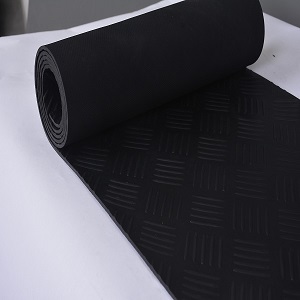
Common Customization Parameters
| Feature | Customization Options | Typical Lead Time |
|---|---|---|
| Base Color | Any Pantone, RAL, or custom color match | 2-4 weeks |
| Logos & Graphics | Screen printing, inlaying, co-extrusion | 3-5 weeks |
| Tile Size & Shape | Standard squares/interlocking tiles, custom cuts | Depends on complexity |
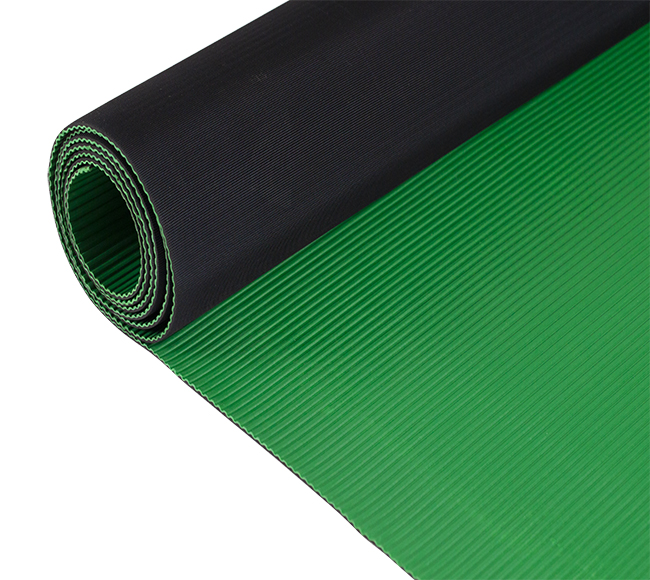
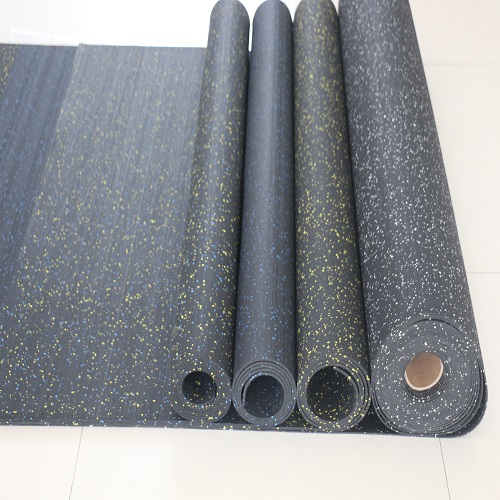
| Surface Texture | Studded, ribbed, smooth, granular | Integrated into production |
The Customization Process: From Idea to Installation
The journey from concept to a fully customized floor is a collaborative and technical process. It begins with a detailed consultation where your specific requirements for color, logo files (usually vector format like .AI or .EPS), and performance needs are gathered. Experts at Ningbo Kaxite Sealing Materials Co., Ltd. then advise on the best manufacturing method—whether through-color blending for solid hues or precision printing for complex logos. Prototypes or color samples are often provided for approval. Once confirmed, production begins using high-grade, UV-stable rubbers and pigments to ensure color fidelity and durability against heavy foot traffic, cleaning chemicals, and UV exposure. The result is a bespoke flooring solution that precisely meets your functional and aesthetic specifications.
Process & Quality Assurance Steps
| Process Stage | Key Activities | Outcome |
|---|---|---|
| Design & Consultation | File review, color matching, method selection | Technical quotation & sample |
| Production | Rubber compounding, molding/calendering, printing/curing | Customized sheets/tiles |
| Quality Control | Slip resistance testing, color check, dimensional accuracy | Certified, shipment-ready product |
| Logistics | Packaging, documentation, shipping coordination | On-time delivery to site |
Key Technical Specifications for Custom Flooring
When evaluating custom anti-slip rubber flooring, technical specs are non-negotiable. The core material must maintain its anti-slip properties (often measured by DIN 51130 R9-R13 ratings or ASTM C1028) even with added colors and graphics. It should retain high tensile strength and resistance to abrasion. Ningbo Kaxite Sealing Materials Co., Ltd. ensures that customization does not compromise performance. Their flooring solutions typically feature excellent resilience, low maintenance needs, and fire-retardant properties. For areas requiring hygiene, anti-microbial additives can be incorporated. Understanding these parameters in a table format helps procurement teams compare offerings accurately and ensure the final product meets all project and safety standards.
Core Performance Specifications Table
| Specification | Standard/Test Method | Typical Value for Custom Flooring |
|---|---|---|
| Slip Resistance | DIN 51130 / ASTM C1028 | R9 to R11 (Medium to High Risk) |
| Thickness | ISO 24341 | 3mm - 15mm (Customizable) |
| Tensile Strength | ISO 37 | > 7 MPa |
| Abrasion Resistance | ISO 4649 | < 250 mm³ |
| Fire Rating | EN 13501-1 / ASTM E648 | Bfl-s1 / Class I |
FAQ: Your Customization Questions Answered
Q: Can anti-slip rubber flooring be customized for specific colors or logos without losing its slip resistance?
A: Absolutely. Reputable manufacturers like Ningbo Kaxite Sealing Materials Co., Ltd. use integral coloring methods (mixing pigments throughout the rubber compound) and specialized printing techniques that bond graphics to the surface. These processes are designed not to interfere with the surface texture that provides traction. The final product undergoes rigorous slip resistance testing to ensure it meets required safety standards.
Q: What is the minimum order quantity (MOQ) for custom-colored or logo-imprinted rubber flooring?
A: MOQs vary by manufacturer and complexity. For standard color customization, MOQs can be as low as 100-200 square meters. For projects involving unique logo printing or intricate patterns, the MOQ might be higher due to setup costs. It's best to consult directly with the supplier, such as Ningbo Kaxite Sealing Materials Co., Ltd., who can often offer flexible solutions based on your specific project scope.
Ready to transform your space with flooring that combines safety, durability, and your unique brand identity? Partnering with an experienced manufacturer is key. Ningbo Kaxite Sealing Materials Co., Ltd. excels in providing tailored anti-slip flooring solutions that solve real-world procurement challenges. Share your project details, including color codes and logo files, to get a precise quote and see how customization can work for you.
For premium, customizable anti-slip rubber flooring solutions, consider Ningbo Kaxite Sealing Materials Co., Ltd.. With extensive expertise in sealing and flooring materials, they provide tailored products that meet specific color, logo, and performance requirements. For inquiries, please contact [email protected].
Chang, T.-P., & Lin, H.-C. (2019). Frictional properties and wear resistance of rubber composites with surface textures for anti-slip applications. Wear, 426-427, 353-361.
Müller, K., & Schmidt, J. (2021). Influence of pigment concentration on the mechanical properties of colored EPDM rubber flooring. Journal of Applied Polymer Science, 138(15), 50182.
Davis, A., Roberts, S., & Chen, L. (2018). Evaluation of long-term color stability in UV-exposed synthetic rubber flooring materials. Polymer Degradation and Stability, 157, 190-198.
Wang, Y., & Zhang, F. (2020). Slip resistance performance of custom-printed rubber surfaces under contaminated conditions. Safety Science, 121, 51-59.
Kato, H., & Suzuki, T. (2017). Development of high-grip rubber flooring with integrated design patterns for public spaces. International Journal of Architectural Engineering, 22(4), 455-462.
Bennett, R., & O'Connell, M. (2022). Sustainable manufacturing processes for customized rubber flooring products. Journal of Cleaner Production, 330, 129876.
Fernández, M., García, P., & López, R. (2019). Adhesion and durability of printed logos on elastomeric substrates for industrial flooring. Progress in Organic Coatings, 132, 90-97.
Jackson, P., & Lee, M. (2016). Acoustic and anti-vibration properties of custom-formulated rubber flooring systems. Building and Environment, 95, 112-119.
Singh, V., & Patel, R. (2021). Comparative analysis of slip resistance standards (DIN, ASTM, ISO) for safety flooring procurement. Journal of Safety Research, 76, 303-311.
Nielsen, C., & Hansen, E. (2018). The role of surface geometry and material hardness in the slip resistance of safety flooring. Tribology International, 117, 248-256.
Related News
- What are the advantages of using sponge rubber sheet for gaskets and seals?
- What Are the Cost Considerations When Buying an Anti Slip Rubber Mat?
- What is the difference between SBR rubber sheet and EPDM rubber sheet?
- Is flat ribbed rubber flooring environmentally friendly and recyclable?
- What is round dot rubber flooring and what are its benefits?
- Can synthetic fiber sheets cause allergies?
Leave me a message