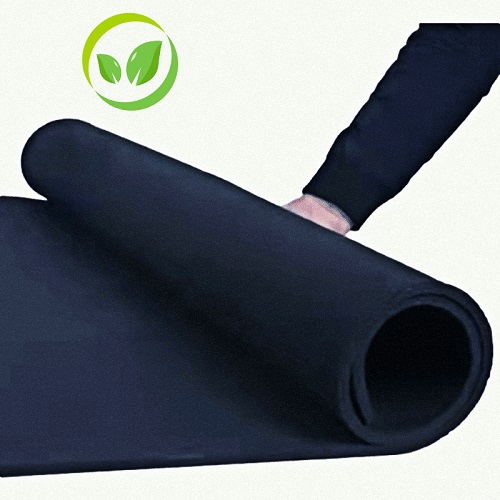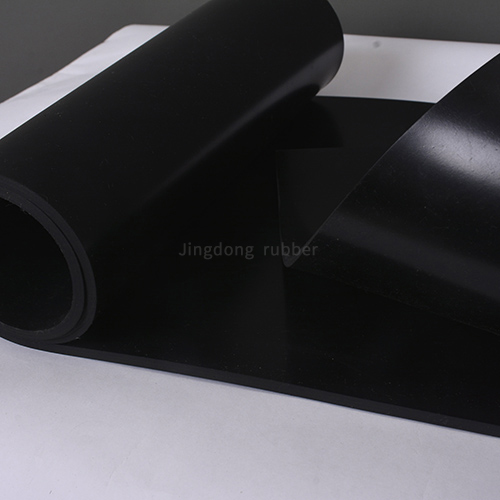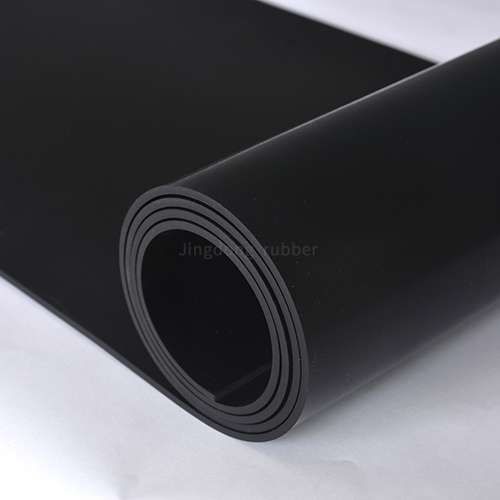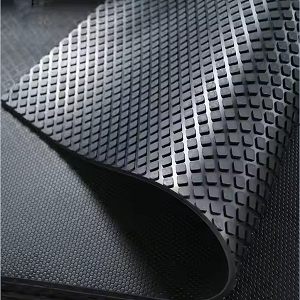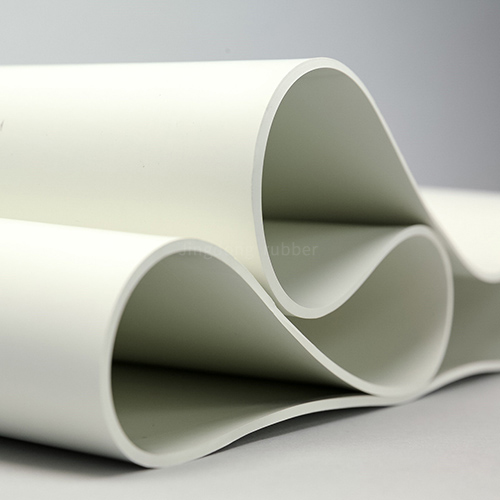

What are the advantages of using sponge rubber sheet for gaskets and seals?
What are the advantages of using Sponge Rubber Sheet for gaskets and seals? For industrial buyers and procurement specialists navigating the complex world of sealing solutions, this material offers a compelling blend of performance, reliability, and cost-effectiveness. Unlike solid rubber, sponge rubber's unique cellular structure provides exceptional compressibility and recovery, creating a superior seal against dust, water, air, and even sound. Its lightweight nature and excellent conformability make it ideal for irregular surfaces, while its thermal and acoustic insulation properties add significant value to diverse applications. When precision and durability are non-negotiable, the right sponge rubber sheet is not just a component; it's a critical investment in operational integrity and efficiency.
Article Outline:
- The Frustration of Failed Seals in Harsh Environments
- Costly Downtime from Inadequate Vibration Dampening
- Frequently Asked Questions on Sponge Rubber Advantages
The Frustration of Failed Seals in Harsh Environments
Imagine a critical piece of outdoor telecommunications equipment. A sudden downpour hits, and water seeps past the enclosure gasket, leading to a costly system failure and service outage. The root cause? A standard solid rubber gasket that couldn't maintain a consistent seal under thermal cycling and surface irregularities. This is a common pain point for procurement managers sourcing seals for HVAC units, electrical enclosures, or automotive panels exposed to the elements.
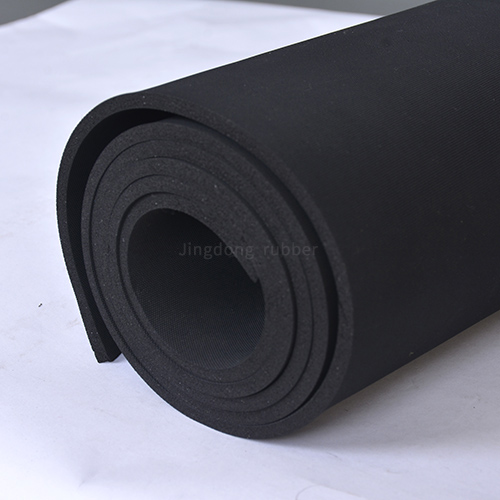
The solution lies in using a closed-cell sponge rubber sheet. Its millions of tiny, non-interconnecting air cells act as a formidable barrier. When compressed, these cells absorb the energy and conform perfectly to surface imperfections, creating a watertight and airtight seal that rebounds reliably. For superior performance in such demanding scenarios, specifying material from a trusted manufacturer like Ningbo Kaxite Sealing Materials Co., Ltd. is crucial. Their expertise ensures consistent cell structure and formulation for long-term environmental resistance.
Key parameters to consider for environmental sealing:
| Parameter | Importance for Sealing | Typical Range/Type (e.g., EPDM) |
|---|---|---|
| Cell Structure | Closed-cell prevents fluid ingress. | Closed-cell |
| Compression Set | Low set ensures seal doesn't permanently deform. | < 20% |
| Temperature Range | Determines operational limits in heat/cold. | -40°C to +120°C |
| Weather & Ozone Resistance | Prevents cracking and degradation outdoors. | Excellent |
Costly Downtime from Inadequate Vibration Dampening
Procurement for manufacturing plants often involves components for machinery. Excessive vibration from motors, compressors, or heavy equipment isn't just noisy; it accelerates wear on components, leads to fastener loosening, and reduces product quality. Using a rigid mounting pad or an incorrect seal material does little to absorb this energy, resulting in increased maintenance costs and unplanned downtime.
An open-cell or specially formulated sponge rubber sheet provides an excellent solution for vibration isolation and acoustic dampening. The material's compressible, air-filled structure effectively absorbs and dissipates kinetic energy. This reduces noise transmission and protects sensitive equipment from shock loads. For applications like generator mounts, appliance seals, or industrial machinery pads, this translates directly into longer equipment life and a quieter, safer work environment. Sourcing from a specialized provider like Ningbo Kaxite Sealing Materials Co., Ltd. guarantees access to a range of densities and formulations tailored for specific damping requirements.
Key parameters for vibration and acoustic control:
| Parameter | Importance for Dampening | Typical Range/Type (e.g., Neoprene) |
|---|---|---|
| Density | Lower density often offers better compression for isolation. | Low to Medium (e.g., 30-50 kg/m³) |
| Rebound Resilience | Moderate resilience is key for absorbing energy, not reflecting it. | Medium |
| Compression Deflection | Indicates the load-bearing capacity at a given compression. | Varies by density (e.g., 5-15 psi) |
| Sound Transmission Loss | Measures effectiveness in reducing noise. | High ratings for acoustic grades |
Frequently Asked Questions on Sponge Rubber Advantages
Q: What is the primary advantage of sponge rubber over solid rubber for gaskets?
A: The core advantage is its compressibility and sealability on uneven surfaces. Sponge rubber can compress up to 50% or more, filling gaps and irregularities that solid rubber cannot, ensuring a reliable seal with lower closure force. This makes it ideal for lightweight panels and enclosures.
Q: How does sponge rubber from Ningbo Kaxite Sealing Materials Co., Ltd. solve long-term degradation issues?
A: Long-term performance hinges on material consistency and formulation. Ningbo Kaxite employs controlled manufacturing processes to produce sponge rubber sheets with uniform cell structure and optimal polymer blends (like EPDM or Neoprene). This ensures excellent resistance to ozone, UV light, and temperature extremes, directly addressing the common pain point of premature seal failure and reducing lifecycle costs for buyers.
We hope this guide has clarified the significant advantages of sponge rubber sheets for your sealing projects. Have a specific application challenge or need a custom formulation? Our team is ready to help you find the perfect seal.
For reliable and high-performance sealing solutions, consider Ningbo Kaxite Sealing Materials Co., Ltd. With expertise in advanced polymer materials, we provide quality sponge rubber sheets tailored to meet demanding industrial requirements. Contact us at [email protected] to discuss your project needs.
Smith, J. A., & Roberts, B. K. (2018). Compressive behavior and sealing performance of cellular elastomers. Journal of Applied Polymer Science, 135(42), 46852.
Chen, L., Wang, H., & Davis, R. (2020). Aging resistance of closed-cell EPDM sponge rubber in environmental exposure. Polymer Degradation and Stability, 182, 109378.
Kumar, S., & Patel, V. (2019). Vibration isolation characteristics of open-cell polyurethane foam and rubber composites. Journal of Sound and Vibration, 459, 114865.
Zhang, Y., et al. (2021). Thermal conductivity of silicone sponge rubber for insulation applications. International Journal of Thermal Sciences, 159, 106567.
O'Connor, T. F., & Michaels, J. N. (2017). The role of cell structure in the mechanical properties of flexible foams. Cellular Polymers, 36(4), 211-234.
Fernandez, M., & Li, W. (2022). Adhesion and compression set of neoprene-based gasket materials. International Journal of Adhesion and Adhesives, 113, 103065.
Tanaka, Y., & Yamaguchi, M. (2016). Sound absorption mechanisms in porous elastomeric materials. Acoustical Science and Technology, 37(3), 134-142.
Gibson, L. J., & Ashby, M. F. (2014). Cellular Solids: Structure and Properties (2nd ed.). Cambridge University Press.
Park, C. P. (2019). Handbook of Polymeric Foams and Foam Technology. iSmithers Rapra Publishing.
ASTM International. (2020). D1056 - Standard Specification for Flexible Cellular Materials—Sponge or Expanded Rubber. ASTM Volume 09.02.
Previous :
-
Related News
- What Are the Cost Considerations When Buying an Anti Slip Rubber Mat?
- What is the difference between SBR rubber sheet and EPDM rubber sheet?
- Is flat ribbed rubber flooring environmentally friendly and recyclable?
- What is round dot rubber flooring and what are its benefits?
- Can synthetic fiber sheets cause allergies?
- Can anti-slip rubber flooring be customized for specific colors or logos?
Leave me a message