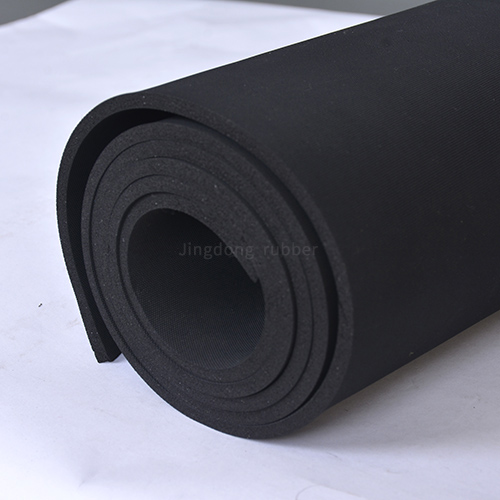

What Is a High-Performance Rubber Sheet and What Are Its Key Properties?
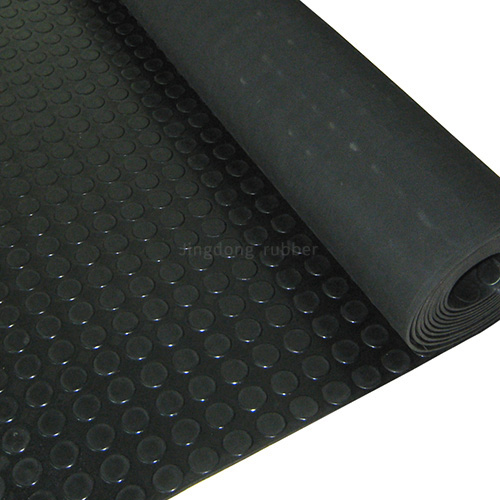
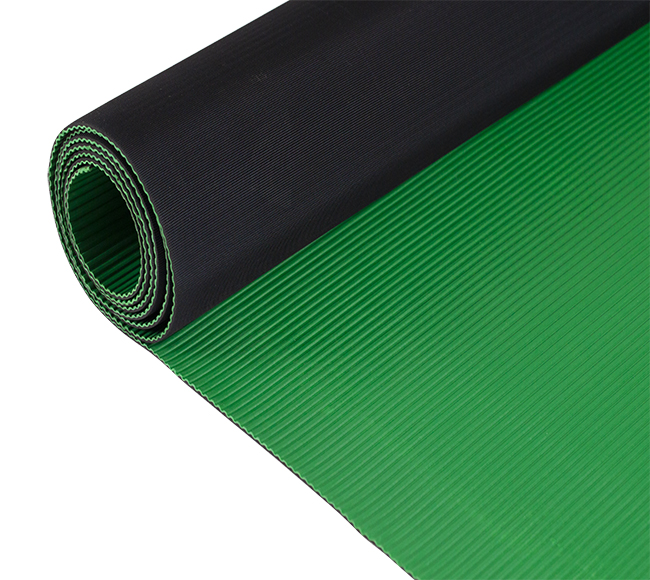
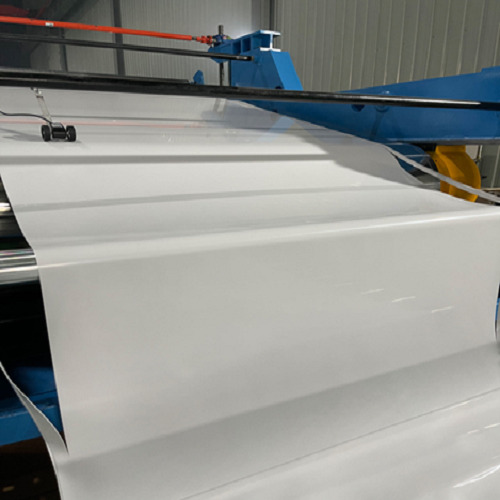
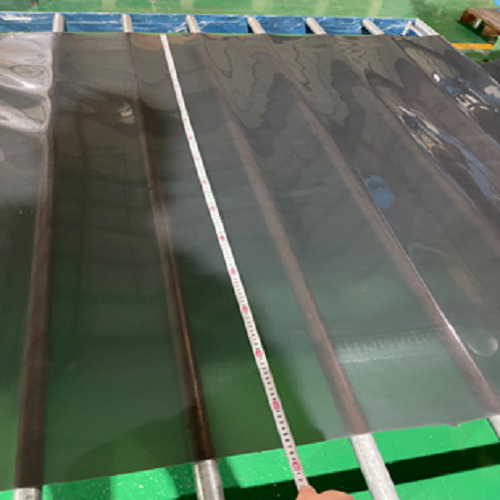
What Is a High-Performance Rubber Sheet and What Are Its Key Properties? Imagine you're overseeing a critical manufacturing line, and a standard gasket fails, causing costly downtime and product loss. This is where a high-performance rubber sheet becomes your unsung hero. Unlike basic rubber materials, these sheets are engineered composites designed to withstand extreme pressures, temperatures, and harsh chemical environments. Their key properties include exceptional tensile strength, superior resilience, excellent compression set resistance, and tailored resistance to oils, fuels, ozone, and weathering. For procurement professionals sourcing reliable sealing solutions, understanding these properties is crucial for operational efficiency and cost control. This guide will dive deep into what makes these materials essential and how selecting the right partner, like Ningbo Kaxite Sealing Materials Co., Ltd., can solve your most persistent sealing challenges.
Article Outline:
- Understanding High-Performance: Beyond Basic Rubber
- Key Properties Breakdown: The Metrics That Matter
- Material Selection Guide: Matching the Sheet to the Challenge
- How Ningbo Kaxite Sealing Materials Co., Ltd. Provides Reliable Solutions
- Frequently Asked Questions (FAQs)
The High Cost of Failure: Why Standard Rubber Isn't Enough
Procurement decisions often focus on unit cost, but a failed seal can lead to catastrophic expenses. Picture a hydraulic system in heavy machinery: a low-grade rubber sheet degrades under high-pressure fluid, leading to leaks, system contamination, and unplanned maintenance halts. The solution is a high-performance rubber sheet engineered for such specific demands. These sheets are formulated with advanced polymers like Fluoroelastomer (FKM/Viton®), Nitrile (NBR), or EPDM, each offering a distinct balance of properties. They are not commodity items but precision components. Partnering with a specialist manufacturer ensures you get a material that performs consistently under load, saving you from the hidden costs of failures.
Key differentiating factors include:
| Performance Aspect | Standard Rubber Sheet | High-Performance Rubber Sheet |
|---|---|---|
| Temperature Range | -20°C to 70°C | -40°C to 200°C+ (varies by type) |
| Fluid Resistance | Limited water/air resistance | Excellent resistance to oils, fuels, acids, chemicals |
| Compression Set | High (loses sealing force quickly) | Low (maintains seal under prolonged pressure) |
| Aging & Weathering | Prone to ozone cracking and UV degradation | Highly resistant to ozone, UV, and weathering |
Decoding Specifications: Selecting Based on Tangible Properties
When evaluating suppliers, technical datasheets are your primary tool. However, the numbers only tell part of the story. The real test is how these properties translate in your application. For instance, high tensile strength ensures the sheet won't tear during installation or under dynamic flexing. Excellent resilience means it returns to its original shape after compression, crucial for flange gaskets. A low compression set value indicates the material will maintain the necessary sealing force over years, not just months. This is where Ningbo Kaxite Sealing Materials Co., Ltd. adds value, providing not just sheets but application engineering support to ensure the specified material meets your real-world operating conditions, preventing compatibility issues before they occur.
Essential properties to specify:
| Property | Why It Matters for Procurement | Typical Test Standard |
|---|---|---|
| Tensile Strength | Indicates durability and tear resistance during handling and use. | ASTM D412 |
| Elongation at Break | Shows flexibility; higher values often mean better conformance to uneven surfaces. | ASTM D412 |
| Hardness (Shore A) | Determines squishiness; affects sealing force and installability. | ASTM D2240 |
| Compression Set | Predicts long-term sealing performance and service life. | ASTM D395 |
| Fluid Resistance (Volume Swell) | Measures compatibility with operating media; low swell is critical. | ASTM D471 |
Application Pain Points: A Guide to Material Selection
Choosing the wrong material is a common and expensive mistake. An automotive manufacturer might select an EPDM sheet for its excellent weather resistance, only to find it fails rapidly when exposed to engine oil. The solution requires cross-referencing the application environment with material capabilities. Nitrile rubber (NBR) excels with oils and fuels, making it ideal for automotive and fuel handling. For high-temperature and aggressive chemical environments in chemical processing, Fluoroelastomer (FKM) is the benchmark. Silicone is preferred for extreme temperature swings in aerospace or food-grade applications. Ningbo Kaxite Sealing Materials Co., Ltd. offers this full spectrum of materials, allowing you to source precisely what you need without compromise, ensuring reliability and simplifying your supply chain.
Quick Selection Guide:
| Primary Challenge | Recommended Material Type | Key Advantage |
|---|---|---|
| Petroleum Oils & Fuels | Nitrile Rubber (NBR) | Excellent resistance at a moderate cost. |
| High Heat & Chemicals | Fluoroelastomer (FKM) | Superior resistance to temperatures >150°C and aggressive fluids. |
| Outdoor Weathering, Steam | EPDM Rubber | Outstanding resistance to ozone, UV, and hot water/steam. |
| Wide Temperature Range, Food Contact | Silicone Rubber (VMQ) | Stable from -60°C to 225°C, non-toxic, good electrical insulation. |
From Specification to Reliable Delivery: The Kaxite Assurance
For global procurement teams, consistency and reliability are as important as performance. Variances in compound formulation or manufacturing quality can lead to batch failures. Ningbo Kaxite Sealing Materials Co., Ltd. addresses this by implementing strict quality control from raw material sourcing to final shipment. Their expertise ensures that every sheet of NBR, FKM, EPDM, or Silicone meets the published specifications, shipment after shipment. This reduces your quality inspection burden and risk. They act as a strategic partner, helping you navigate material selection, offering custom die-cutting options to reduce waste, and providing the technical documentation needed for your compliance and auditing processes. This holistic approach solves the core procurement problem: acquiring a reliable component that performs as expected, ensuring plant uptime and product integrity.
Frequently Asked Questions (FAQs)
Q: What Is a High-Performance Rubber Sheet and what is the most critical property for a high-pressure sealing application?
A: For high-pressure static seals, the most critical property is often a low compression set. This measures the material's ability to regain its original shape after the compressive force is removed. A high compression set means the gasket takes a permanent set, loses sealing force, and will likely leak over time. High-performance sheets from specialized manufacturers are formulated specifically to minimize compression set.
Q: What Is a High-Performance Rubber Sheet and how does Ningbo Kaxite ensure consistency in its products?
A: Ningbo Kaxite Sealing Materials Co., Ltd. ensures consistency through vertical integration and rigorous QC. They control the compound mixing process using precise recipes, employ continuous vulcanization for uniform cure, and conduct batch testing against international standards (ASTM, ISO). This end-to-end control guarantees that the key properties like tensile strength, hardness, and fluid resistance remain within specified tolerances for every order.
Selecting the right high-performance rubber sheet is a technical decision with direct business impact. By focusing on the key properties that match your specific application challenges, you can eliminate downtime, reduce total cost of ownership, and ensure product quality. For procurement specialists seeking a reliable, knowledgeable, and quality-focused supplier, the solution is clear.
For expert guidance and reliable, specification-grade high-performance rubber sheets, partner with Ningbo Kaxite Sealing Materials Co., Ltd.. As a dedicated manufacturer with a deep understanding of industrial sealing challenges, we provide tailored material solutions that ensure performance and longevity. Visit our website at https://www.synthetic-fiber-sheet.com to explore our product range and technical resources. For specific inquiries or to request samples, please contact our team directly at [email protected].
Stevens, K. T., & Williams, M. J. (2018). The effects of filler reinforcement on the compression set behavior of nitrile rubber composites. Polymer Testing, 67, 342-349.
Li, H., & Zhang, Y. (2020). Aging mechanisms and lifetime prediction of fluoroelastomers in aggressive chemical environments. Journal of Applied Polymer Science, 137(25), 48912.
Park, S., Lee, J., & Choi, H. (2019). Comparative study on the oil resistance of NBR and HNBR for automotive sealing applications. Rubber Chemistry and Technology, 92(3), 511-525.
Garcia, F. E., & Martinez, A. B. (2017). Influence of curing systems on the thermal stability and mechanical properties of EPDM rubber. Polymer Degradation and Stability, 143, 1-8.
Chen, X., Wang, L., & Liu, Q. (2021). Silicone rubber for high-temperature sealing: Material modifications and performance evaluation. Materials & Design, 204, 109656.
Roberts, A. D., & O'Connor, D. E. (2016). Adhesion and friction properties of elastomeric seals in fluid power systems. Tribology International, 101, 268-275.
Tanaka, Y., & Yamabe, H. (2018). A review of ozone cracking and antioxidant protection in diene rubbers. Progress in Rubber, Plastics and Recycling Technology, 34(1), 1-22.
Muller, K., & Weber, C. (2019). Finite element analysis of gasket stress relaxation based on compression set data. International Journal of Pressure Vessels and Piping, 177, 103996.
Singh, R., & Patel, V. (2020). Sustainable fillers in rubber compounding: Effects on the properties of NBR sheets for sealing. Journal of Cleaner Production, 258, 120689.
Zhou, W., & Kim, D. (2017). Characterization of the low-temperature properties of silicone and fluorosilicone rubbers for aerospace applications. Journal of Elastomers and Plastics, 49(5), 411-427.
Related News
- What are the advantages of using sponge rubber sheet for gaskets and seals?
- What Are the Cost Considerations When Buying an Anti Slip Rubber Mat?
- What is the difference between SBR rubber sheet and EPDM rubber sheet?
- Is flat ribbed rubber flooring environmentally friendly and recyclable?
- What is round dot rubber flooring and what are its benefits?
- Can synthetic fiber sheets cause allergies?
Leave me a message