
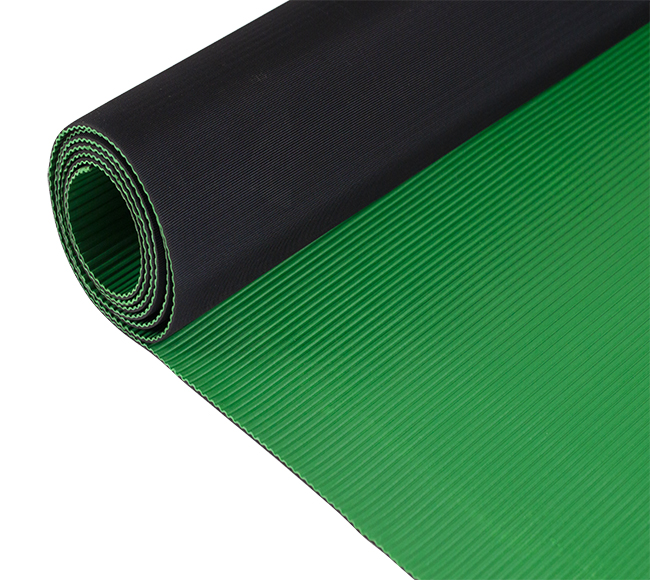
Neoprene Rubber Sheet (CR) — Polychloroprene Sheet for Weather-Resistant Gaskets and Linings
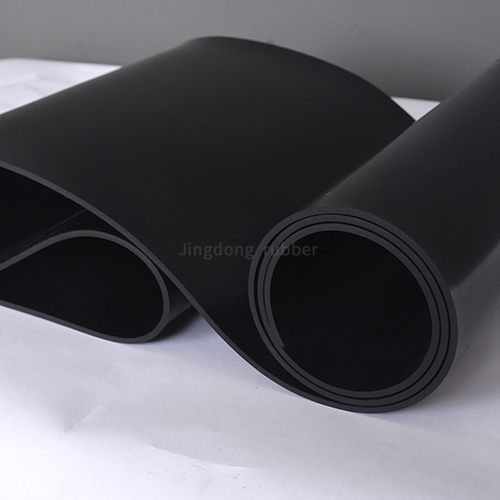
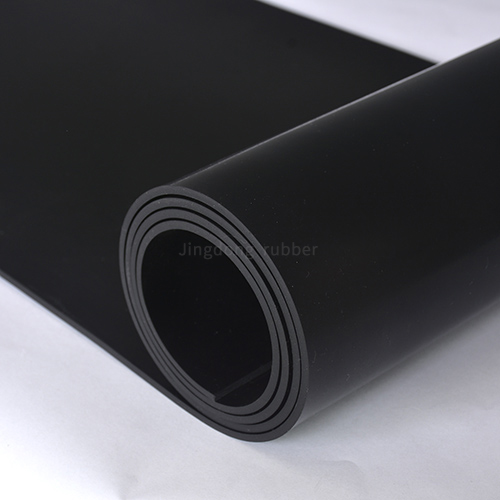
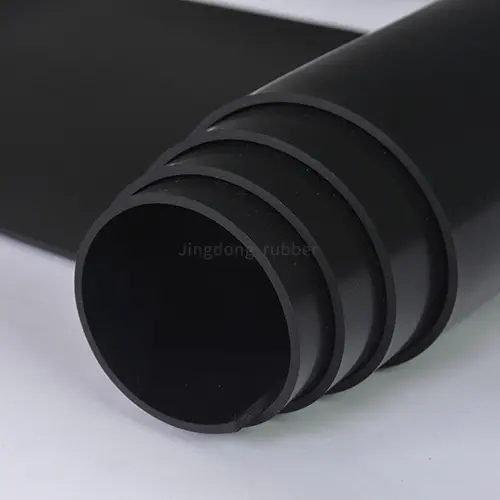
A chloroprene rubber sheet supplied in five grades from 50 to 65 Shore A, with specific gravity from 1.35 to 1.50 g/cm³ and tensile strength from 3 to 10 MPa. Neoprene rubber sheet is chosen where a gasket, lining or weatherstrip has to survive outdoor exposure: it resists weathering, ozone and ageing far better than natural rubber or SBR, and it also holds a useful level of oil and flame resistance. Standard thickness runs from 1 mm to 100 mm, standard width from 0.915 m to 2 m, and cut sizes are produced to order.
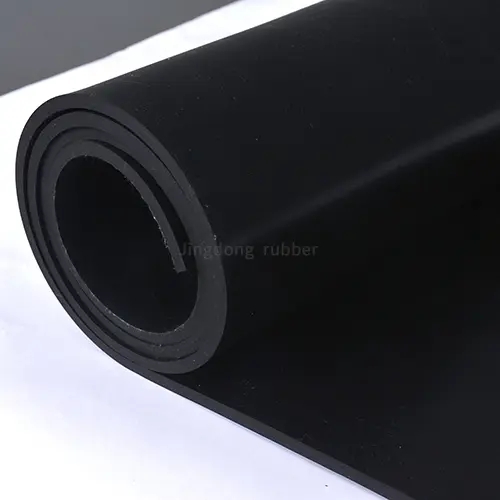

Neoprene Rubber Sheet (CR) — Polychloroprene Sheet for Gaskets, Linings and Outdoor Sealing
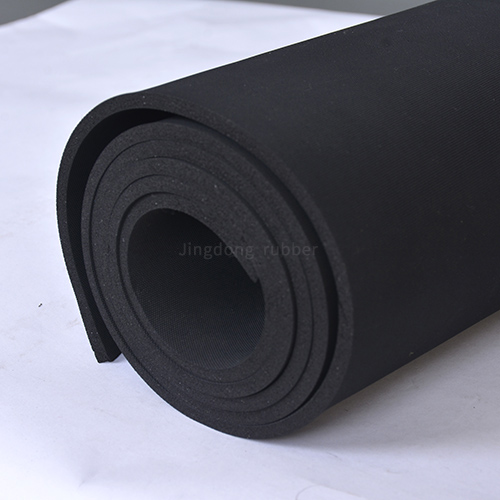
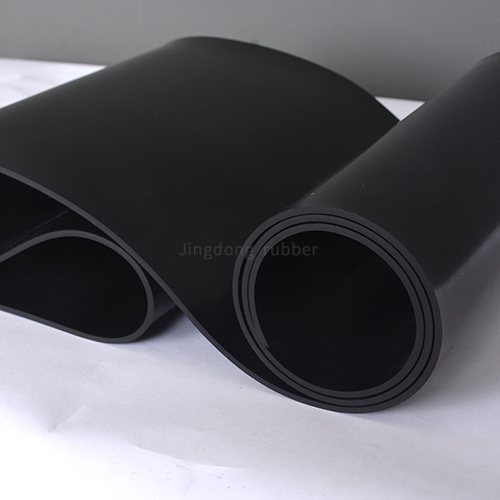
Neoprene rubber sheet is a vulcanised polychloroprene compound supplied in flat sheet or roll form. Polychloroprene is the generic name for the polymer; CR is its standard abbreviation, and Neoprene is the trade name under which the material was first commercialised. All three names refer to the same family of material, which is why a buyer searching for neoprene rubber sheet, CR rubber sheet or polychloroprene sheet is looking for the same product.
The reason CR is specified rather than natural rubber, SBR or EPDM comes down to what it resists. Its molecular structure is inherently resistant to ozone and to oxygen attack, so it does not crack in the way natural rubber does when it is stretched and exposed to air and sunlight. That makes it a natural choice for anything left outdoors or in an unventilated enclosure: gaskets on outdoor equipment, weatherstripping, marine linings, expansion joints and cable jacketing. CR is also inherently flame retardant to a degree that hydrocarbon rubbers such as NR, SBR and EPDM are not, and it retains moderate resistance to animal and vegetable oils, which is unusual for a weather-resistant rubber.
The same structure is what limits it. CR swells badly in aromatic hydrocarbons such as benzene, toluene and xylene, and in ketones such as acetone and methyl ethyl ketone, because those solvents are chemically similar enough to the polymer to penetrate it. For those media, NBR rubber sheet or FVMQ rubber sheet is the correct choice instead, and where weathering is the only requirement and oil resistance is not needed at all, EPDM rubber sheet is usually cheaper.
The five grades below are all the same polymer family, differing in filler loading. Filler content is what sets the balance between cost, density and mechanical strength, so the grade should be selected against the mechanical duty rather than against price alone.
Grades and Physical Properties
Five standard grades are produced. Specific gravity is a useful indicator of filler content: the lower the figure, the more polymer there is in the compound, and the higher the tensile strength and elongation that can be expected. The economy grade at 1.50 g/cm³ is the most heavily filled and the commercial grades sit around 1.35 to 1.45.
Grade table — on a mobile device, scroll sideways to read every column.
| Code | Grade | S.G. g/cm³ | Hardness Shore A | Tensile strength MPa | Elongation at break % | Colour |
|---|---|---|---|---|---|---|
| JD-CR65150 | Economy | 1.50 | 65 | 3 | 200 | Black |
| JD-CR50135 | Soft CR | 1.35 | 50 | 4 | 250 | Black |
| JD-CR65145 | Commercial | 1.45 | 65 | 4 | 250 | Black |
| JD-CR65135 | High grade | 1.35 | 65 | 5 | 300 | Black |
| JD-CR60140 | High grade | 1.40 | 60 | 10 | 350 | Black |
Two grades share the name “High grade” but are not equivalent. JD-CR65135 is a 65 Shore A compound with 5 MPa tensile strength, while JD-CR60140 is a 60 Shore A compound with 10 MPa tensile strength and higher elongation. They behave differently in a bolted joint: the harder grade resists compression set better, the softer grade conforms to a rough flange better. Please quote the code rather than the grade name when ordering, and confirm which of the two is intended for a given application.
Test methods to add: the properties above are normally reported against ASTM D412 (tensile strength and elongation), ASTM D2240 (durometer hardness) and ASTM D792 (specific gravity). Stating the test method on the data sheet is what allows a buyer to compare these figures with a competitor’s sheet on equal terms, and it is the single easiest credibility improvement available on this page.
Standard Dimensions and Thickness Range
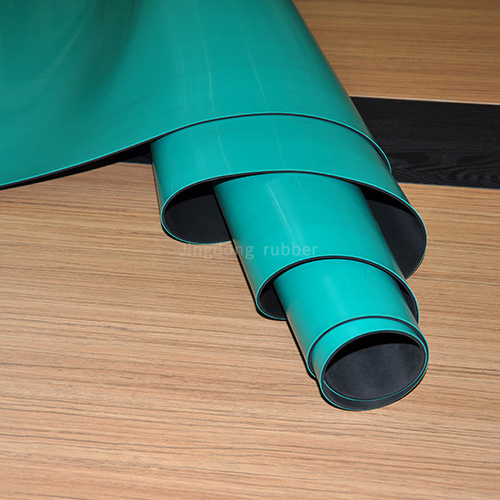
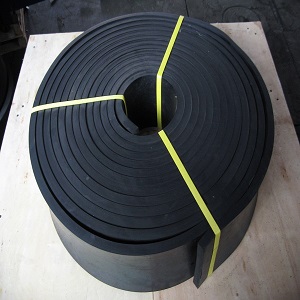
Sheet is supplied in roll form at the thinner end of the range and as flat sheet at the thicker end, because a thick sheet cannot be rolled without setting a curl into it. Width and length are quoted as a standard band rather than a single size, so the exact dimensions of a given order are confirmed at quotation.
Dimensions — on a mobile device, scroll sideways to read every column.
| Property | Range | Supply form |
|---|---|---|
| Width | 0.915 m up to 2 m | Roll or sheet |
| Length | 10 m to 20 m | Roll or sheet |
| Thickness | 1 mm to 20 mm | In roll |
| Thickness | 20 mm to 50 mm | In sheet |
| Thickness | 50 mm to 100 mm | Confirm supply form and lead time |
| Cut sizes | To drawing | Cut or slit to order |
Thickness range to confirm: the specification states a standard thickness range up to 100 mm, but the supply form is described only up to 50 mm (1–20 mm in roll, 20–50 mm in sheet). The row above for 50–100 mm therefore needs the actual supply form and lead time filled in. If 100 mm is a maximum that is only achievable in specific grades or to special order, saying so is better than leaving the range open.
Chemical Resistance — What CR Handles and What It Does Not
Chemical resistance is the first thing a sealing engineer checks and usually the last thing a rubber sheet page states, which is why so many enquiries start with a compatibility question. The two columns below set out where CR is a safe choice and where it is not.
CR performs well with
- Weathering, ozone and oxygen — the defining strength of the material, and the reason it is used outdoors where natural rubber and SBR perish.
- Animal and vegetable oils — moderate resistance, which is unusual for a weather-resistant rubber and makes CR useful on food-processing and agricultural equipment.
- Inorganic salts and dilute inorganic acids — suitable for many water-treatment, marine and plating-area duties, subject to temperature.
- Water and steam (low pressure) — good resistance to water at ambient and moderate temperature.
- Flame exposure — CR is inherently more flame retardant than hydrocarbon rubbers and does not continue to burn readily once the ignition source is removed.
- Refrigerants and moderate aliphatic oils — usable in many refrigerant and general machinery sealing duties, but confirm the specific refrigerant and lubricant combination.
CR is not suitable for
- Aromatic hydrocarbons — benzene, toluene, xylene and similar solvents penetrate the polymer and cause severe swelling and loss of strength.
- Ketones — acetone and methyl ethyl ketone attack CR directly. This is the limitation stated on the original data and it is a hard limit, not a matter of degree.
- Chlorinated solvents — the material should not be selected where these are present without a compatibility test.
- Esters and ethers — generally unsuitable, again because of swelling.
- High-temperature continuous service — the stated range is −30°C to +70°C. Confirm the upper limit per grade before specifying for a hot application.
- Strong oxidising acids — resistance falls off sharply with concentration and temperature, so these require testing rather than assumption.
How to use this: chemical resistance is not a single yes-or-no property. It depends on the medium, its concentration, the service temperature and the duration of exposure, and a material that swells 10 % in one solvent may swell 60 % in a close relative of it. For any application outside the safe column above, state the medium, concentration and temperature and the compound will be checked against it rather than quoted from a general table.
Selecting the Right Neoprene Rubber Sheet
Selection follows a fixed order, because each decision constrains the next. Working through the sequence below avoids the two common mistakes: choosing a grade on price and then finding it does not hold a seal, and choosing a thickness the flange geometry cannot accommodate.
- Confirm the medium and the temperature Check the chemical resistance column above first. If the medium is an aromatic hydrocarbon, a ketone or a chlorinated solvent, CR is the wrong material and a different sheet should be selected regardless of how well the mechanical properties fit. Where the medium is compatible, note the maximum continuous temperature, because the stated service range is −30°C to +70°C and applications approaching the upper limit need the grade confirmed.
- Choose the hardness against the joint Hardness determines how well the sheet conforms to the mating surfaces. A softer compound such as the 50 Shore A JD-CR50135 conforms to a rough or slightly uneven flange at lower bolt load, while a 65 Shore A grade resists compression set better and is the usual choice where the joint is bolted tight and held under load. Where the flange is flat and the bolt load is high, the harder grade gives a more stable seal over time.
- Choose the grade against the mechanical duty Tensile strength and elongation in the table range from 3 MPa and 200 % in the economy grade to 10 MPa and 350 % in JD-CR60140. For a static gasket under modest load, the economy grade is often adequate. For a lining subject to abrasion, flexing or repeated handling, the higher-tensile grades last considerably longer and the difference in unit price is normally smaller than the difference in service life.
- Fix the thickness against the flange and the gap Gasket thickness has to fill the gap the flange presents without crushing the sheet beyond its elastic range. Too thin and the sheet cannot accommodate surface irregularity; too thick and it extrudes or takes a permanent set. The thickness range is 1 mm to 100 mm, with 1–20 mm supplied in roll and 20–50 mm in sheet form, so the supply form follows from the thickness.
- Confirm the cut size and the quantity Standard width runs from 0.915 m to 2 m and standard length from 10 m to 20 m. Sheet can be cut or slit to a drawing, which is usually cheaper than cutting a standard roll on site and produces a cleaner edge. State whether the finished part is a full sheet, a strip or a die-cut gasket, and the quantity required.
Fabrication, Cutting and Installation
Applications
Neoprene rubber sheet is specified wherever a seal or lining has to survive weather and ozone exposure rather than aggressive solvents. The common duties are set out below.
Applications — on a mobile device, scroll sideways to read every row.
| Application | Why CR is selected |
|---|---|
| Outdoor equipment gaskets | Equipment left in the open is exposed to ozone and ultraviolet light continuously. CR does not crack under that exposure the way natural rubber and SBR do, which is the single most common reason for choosing it. |
| Weatherstripping and seals | Window, door and enclosure seals are exposed to weather on one face and to the interior on the other. CR tolerates both without the hardening that makes a seal stop conforming. |
| Marine and dock linings | Salt water, sunlight and abrasion together. CR resists all three, and is commonly used for fenders, dock bumpers and marine hatch seals. |
| Expansion joints and bridge bearings | Civil engineering joints are exposed to weather for decades and cannot be maintained. The ageing resistance of CR is what makes it suitable for a component with that service expectation. |
| Agricultural and food-processing seals | Moderate resistance to animal and vegetable oils allows CR to be used where a seal meets both weather and food-grade oils, which is a combination that defeats many other weather-resistant rubbers. |
| Electrical and cable applications | CR has good electrical insulation properties and inherent flame resistance, and is used for cable jacketing and insulating pads where a hydrocarbon rubber would not meet the flame requirement. |
| Anti-vibration pads and buffer strips | Used where a resilient pad has to hold its properties outdoors over a long period, in machinery mounts and impact strips. |
| Chemical plant linings (compatible media only) | Used as a tank and pipe lining where the medium is within the resistance list above, which is why the compatibility check is the first step in selection rather than the last. |
The same range of industrial sheet materials is listed under the industrial rubber sheet category, and the application notes for each industry are collected on the applications page. Where a soft compressible material is needed rather than a solid sheet, sponge rubber sheet covers that requirement.
Buyer FAQ
- Is neoprene rubber sheet the same as CR rubber sheet?Yes. Neoprene is the trade name under which polychloroprene was first commercialised, CR is the standard abbreviation for chloroprene rubber, and polychloroprene is the generic chemical name. All three describe the same material family, and the grade codes on this page use the CR designation.
- Which grade should I choose?Start from the medium and the temperature, then choose hardness against the joint and grade against the mechanical duty. For a lightly loaded static gasket the economy grade is often adequate; for a lining subject to abrasion or flexing, the higher-tensile grades last considerably longer. The two grades both named “High grade” are not equivalent, so please quote the code.
- What is the temperature range?The stated service range for this sheet is −30°C to +70°C. Standard chloroprene compounds are often used at higher continuous temperatures, so if your application runs above +70°C, state the temperature and the grade will be confirmed rather than quoted from a general figure.
- Can neoprene rubber sheet be used with oil and fuel?It has moderate resistance to animal and vegetable oils, which suits many food-processing and agricultural duties. It is not suitable for aromatic hydrocarbons such as benzene, toluene and xylene, or for ketones such as acetone. For petroleum-based oils and fuels, NBR rubber sheet is normally the better choice.
- Can the sheet be cut to a specific size?Yes. Standard width runs from 0.915 m to 2 m and standard length from 10 m to 20 m, and sheet is cut or slit to a drawing. Send the finished part dimensions, the thickness and the quantity for a quotation.
- What information do you need to quote?The medium the sheet will contact and the service temperature, the required hardness and grade code if known, the thickness, the finished size, whether it is a full sheet or a cut part, and the quantity. If the application is a replacement for an existing part, the original thickness and hardness are the two figures that matter most.
Related Rubber Sheet Materials
Send the Medium, Temperature and Size for a Quotation
Tell us what the sheet will contact and at what temperature, the hardness or grade code you need, the thickness and the finished size, and the quantity required. If you are replacing an existing gasket, send the original thickness and hardness and we will match the grade and reply with price and lead time.
Request a Quotation